The 4 Oven Aga Cooker

The Complete Domestic Workhorse.


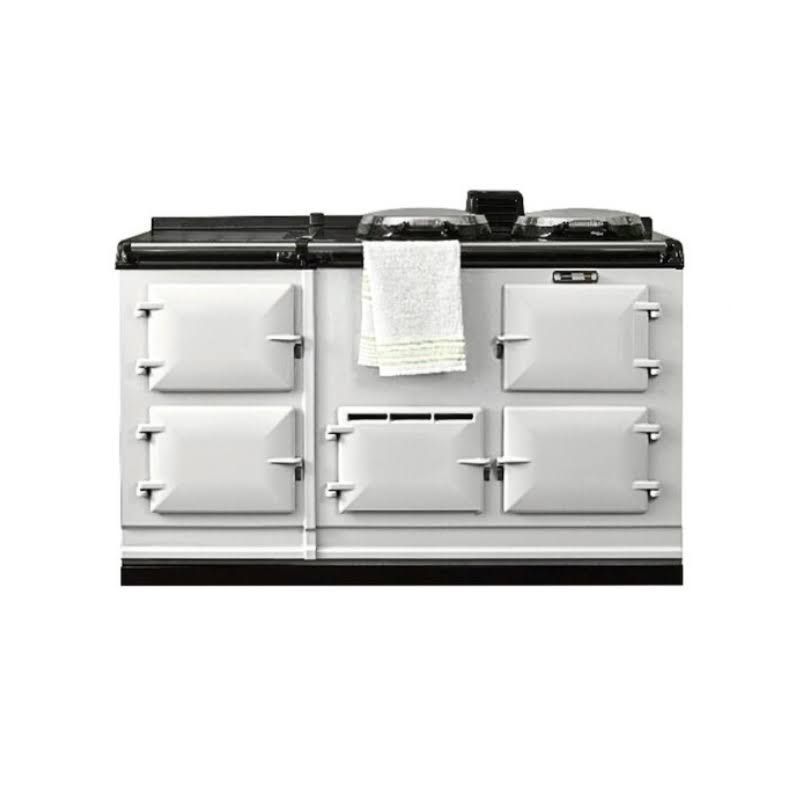
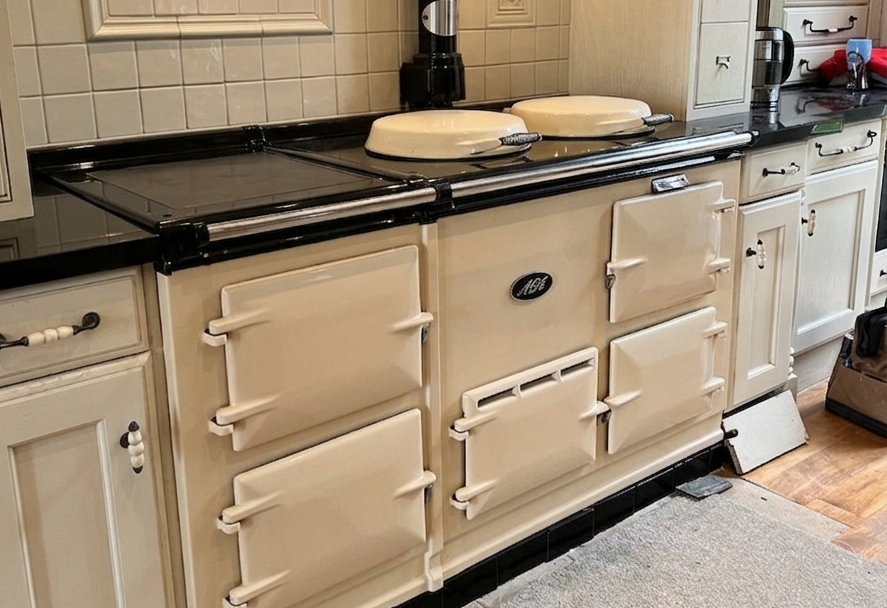
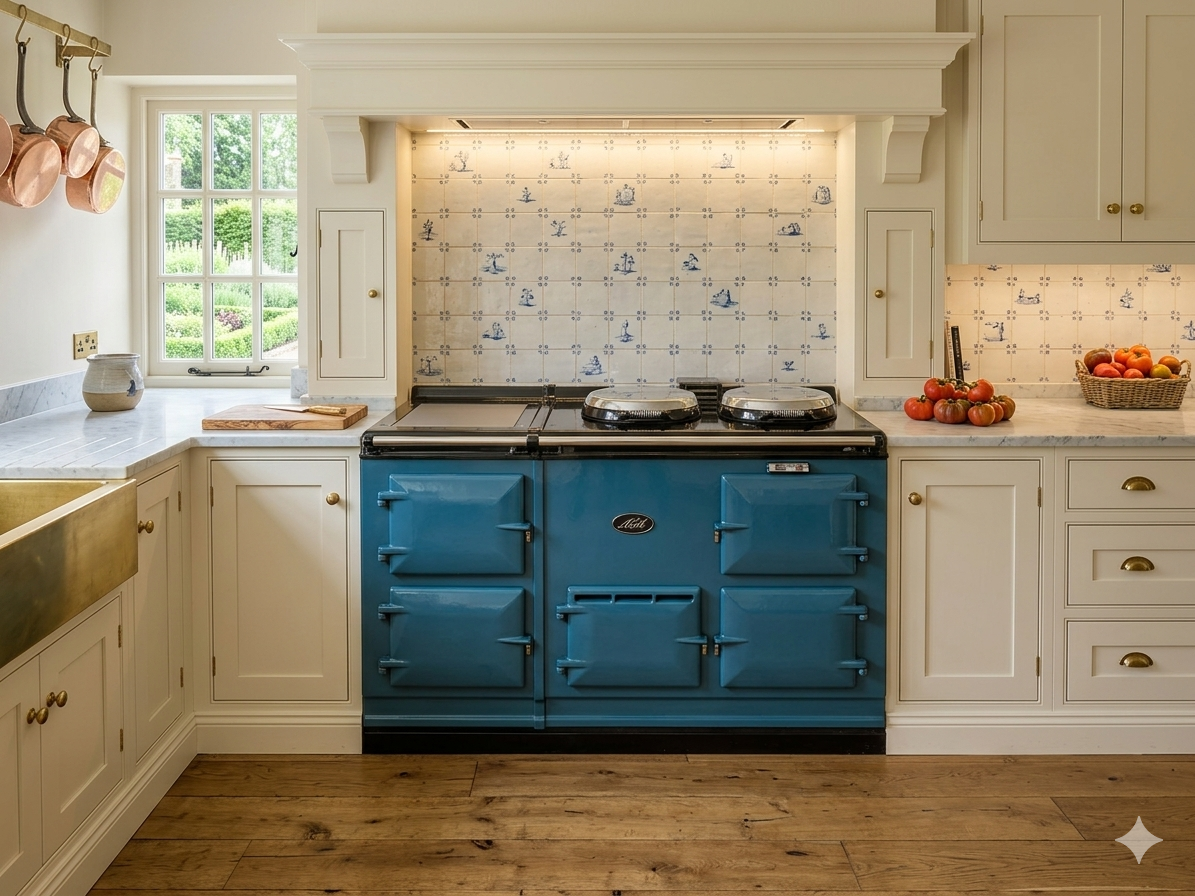
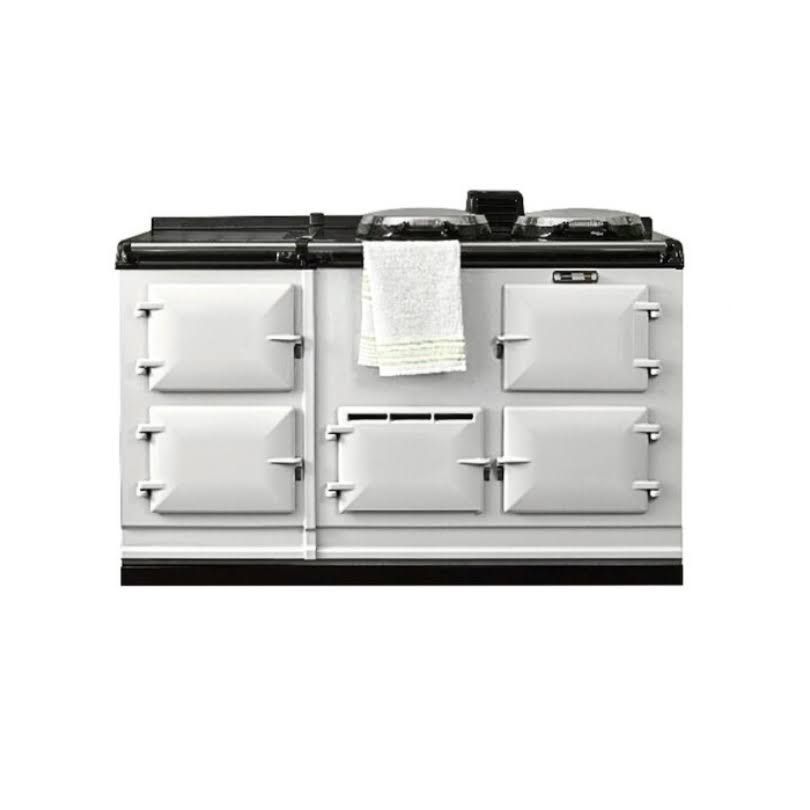
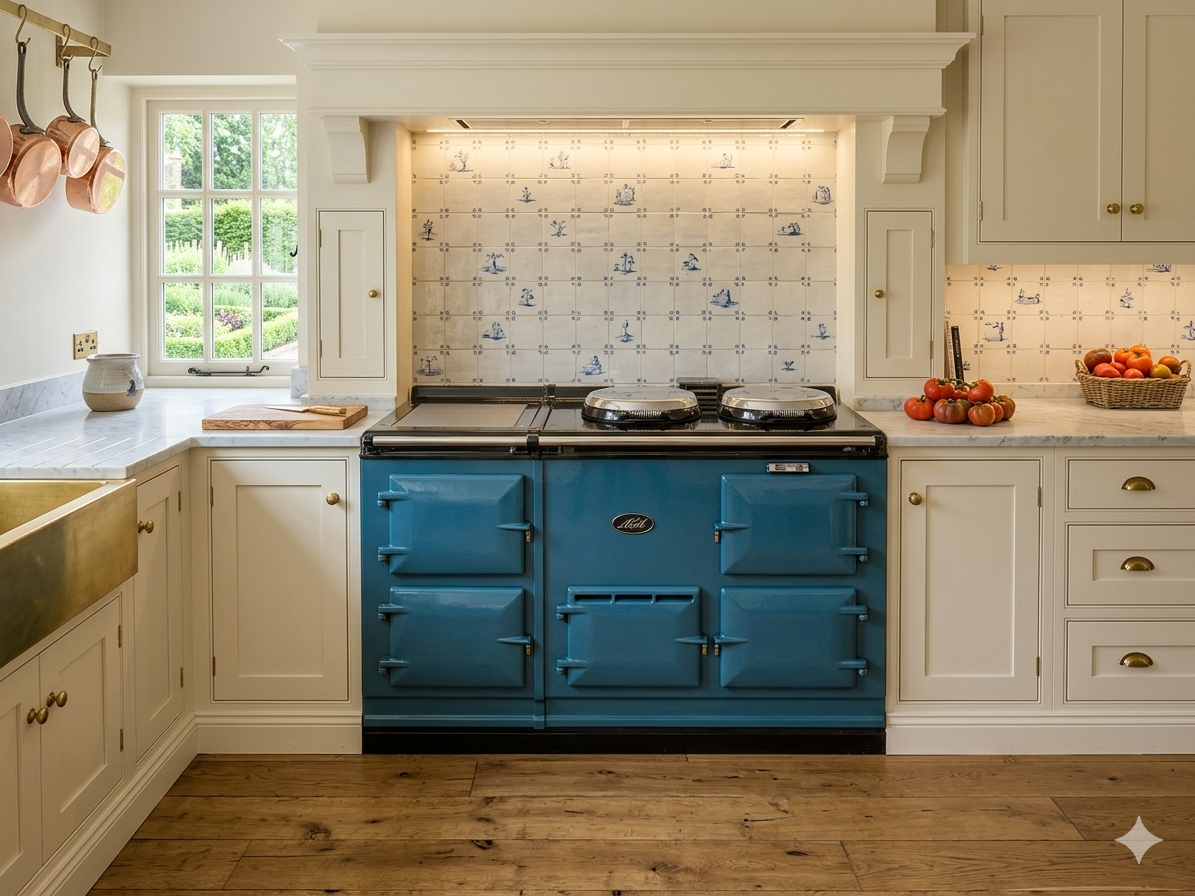
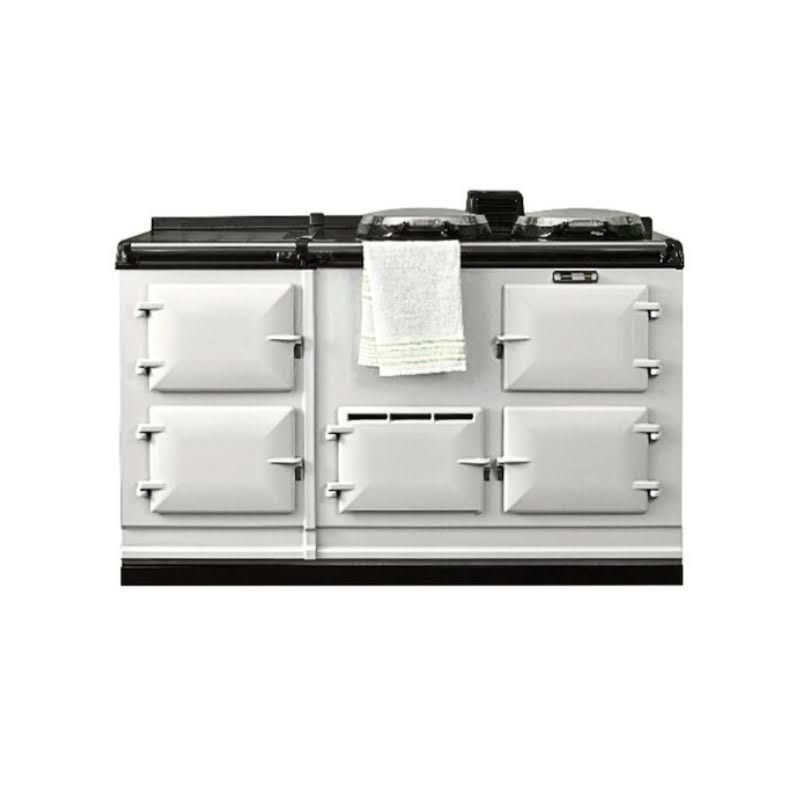
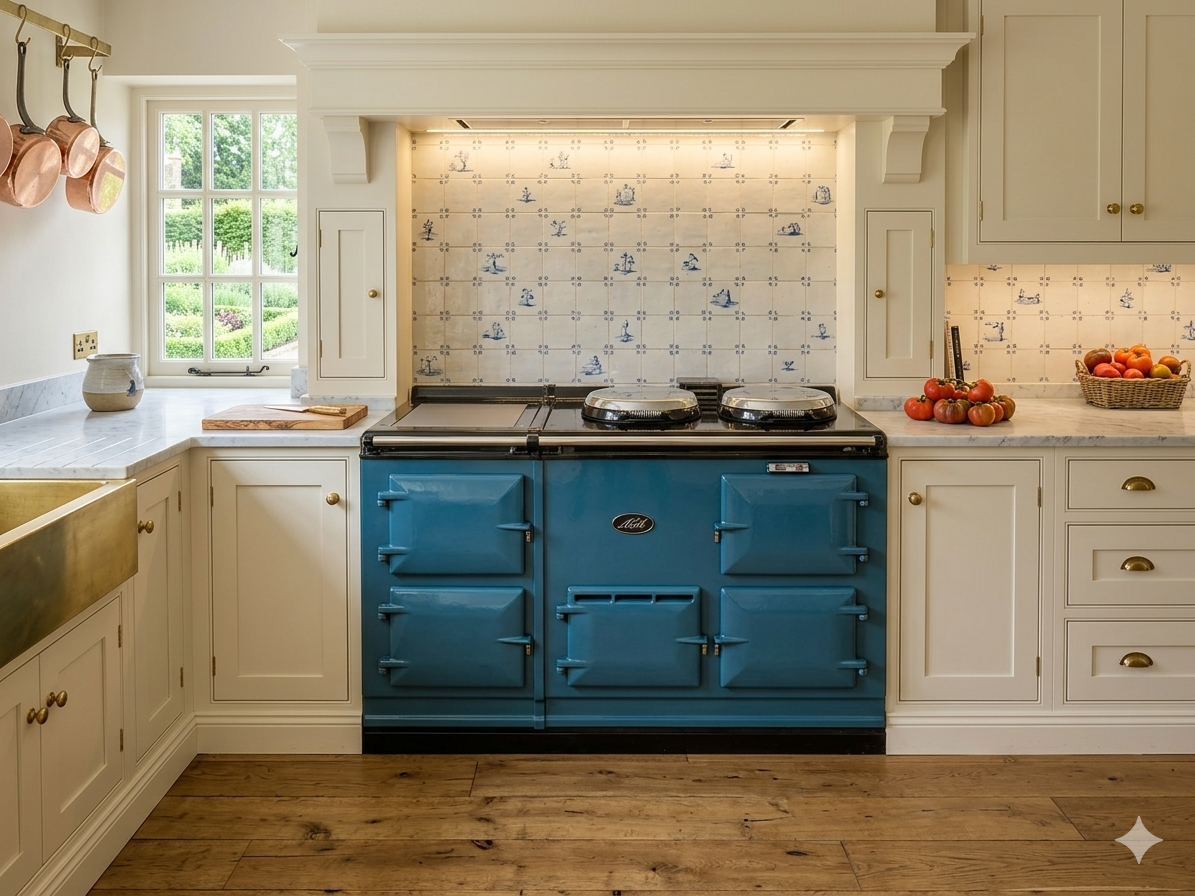
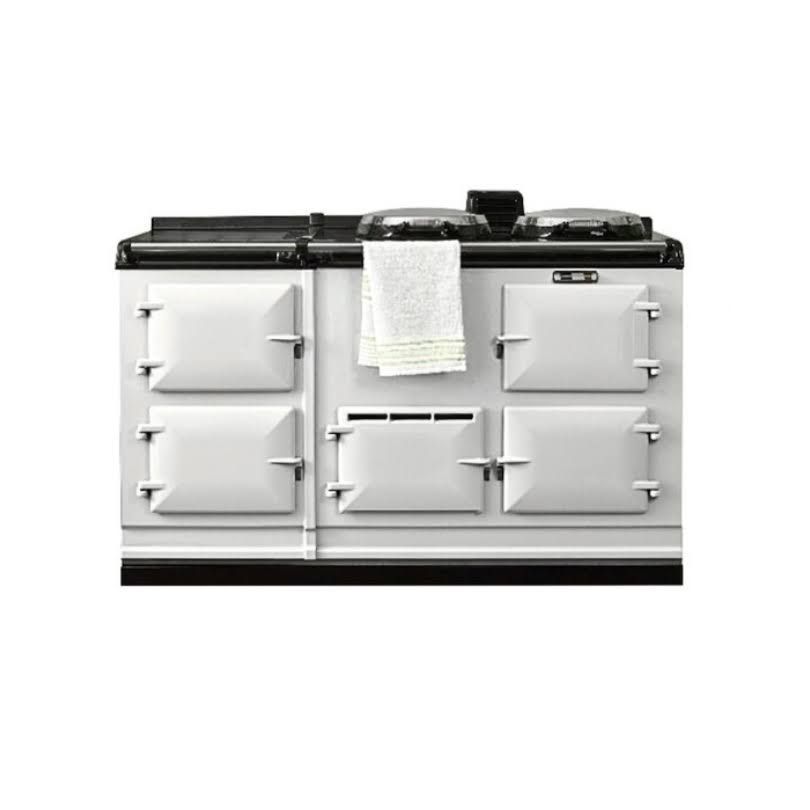
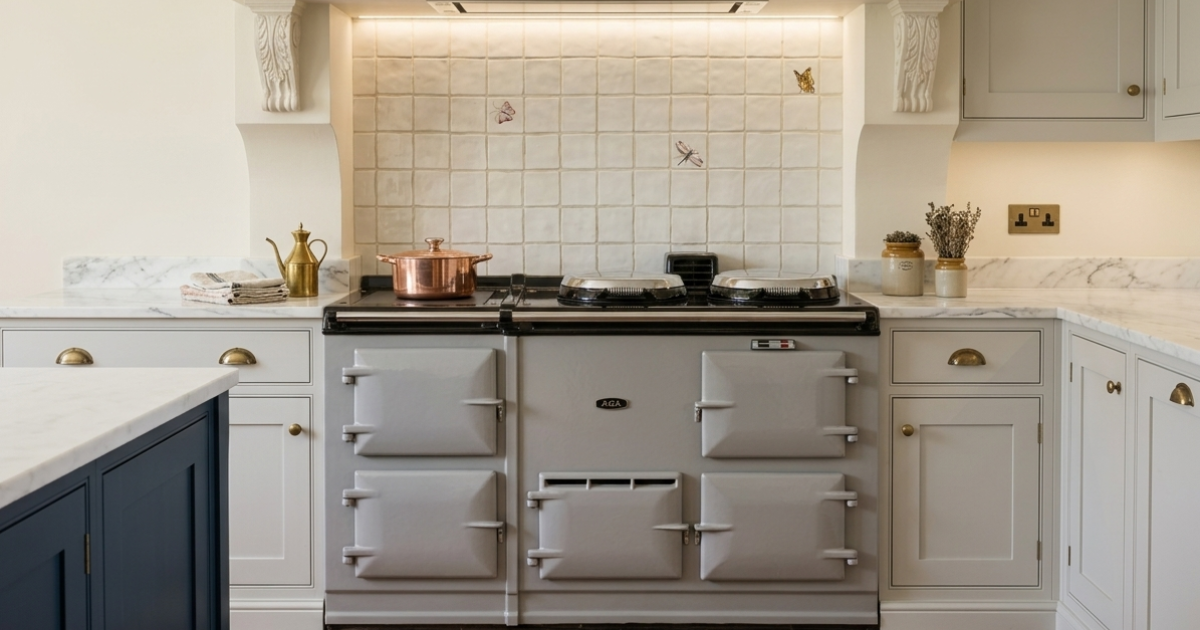
The 4 oven Aga range cooker is an entertainer's dream. The addition of a warming cupboard to the left hand side, contains the Simmering Oven and an additional Warming Oven - perfect for keeping meals warm or plates ready for serving. As with the 3 oven model, you have a baking oven which is now located at the bottom right.

The Roasting Oven is still the highest temperature oven and is located at the top right of the front plate. Each of the RH ovens have the dimensions W:349mm x H:254mm x D:495mm. The total 4 oven dimensions (without plinths or clearances) are W: 1487mm x H: 851mm x D: 679mm. See our install guide for clearances etc.


The 4 Oven Aga range cooker is basically a 2 Oven model, with an additional 'hotcupboard' on the left hand side. The bottom Right Hand oven, which is typically a Simmering Oven on the 2 Oven model, has increased temperature and becomes a Baking Oven. The hotcupboard section is made from fabricated steel and provides a Simmering Oven, Warming Oven and Warming Plate.


Your Boiling Plate at optimum temperature will be approximately 315c. Your Simmering Plate will be around 100c cooler, at approximately 215c. Some Aga Cookers run slightly hotter or cooler than others - every model is different!


The roasting oven (top right) has an average temperature of between 220c-240c (depending on the shelf position inside the oven) and the simmering oven (top left) sits at 115-140c. The baking oven (bottom right) is around 180c and the warming oven (bottom left) has a temperature of approx 65c. These are average temperates and they will fluctuate depending on your shelf position or door seals/insulation.


In addition to the Warming Oven, you also gain a Warming Plate on top of the Aga range cooker. This is perfect for keeping dishes warm before serving, or keeping the kettle ready to boil for your cuppas. If you're missing your traditional electric/gas hob, you can integrate them into the hot cupboard by removing the warming plate.

About The Author:


Steven has been working with Aga Cookers since he was helping his father from the ripe old age of 10 years old! He created SALTIRECOOKERS with transparency and information in mind - a sustainable, family business, built to advise and share knowledge passed throughout the generations.


His absolute favourite part of the job is meeting all of the dogs.


About The Author:


Steven has been working with Aga Cookers since he was helping his father from the ripe old age of 10 years old! He created SALTIRECOOKERS with longevity in mind - a sustainable, family business, built to last throughout the generations. His favourite part of the job is meeting the dogs, seeing a good before/after and hearing great feedback.

Some Further Reading:


by Steven Johnson 22 February 2026
Our black steel plinths are available to add onto your cooker order if required. They add additional height to the overall Aga dimensions and are available in multiple heights to suit your kitchen design. Traditionally, these British-made Aga Cookers were 851mm from the base to the top of the black enamelled surface. When do you need a plinth? If your worktop or ideal working height is taller than 851mm and you want your Aga Cooker to match them, you'll need a plinth underneath. Brand new Aga Cookers (as well as our ESSE and Everhot cookers) have a fixed height plinth built into the cooker body. If you need these raised higher, you'll need to lay marine-grade plywood or concrete at the required height before installation. What sizes of plinths are available? Our plinths are available in 50mm to 80mm sizes. They also allow for levelling of the base before the assembly of the cooker begins. How do I choose my plinth size? When choosing your required height, you should consider your finished floor height vs your worktop height. It's standard for Aga Cookers to finish slightly proud of the worktop, since the top plate is curved rather than a right-angle ( photo shown below ). If you were to finish level with the worktop, you will have a bigger 'valley' in-between, where crumbs and debris love to collect! Usually, the plinth is seated onto the subfloor, with finished flooring/tiles ran up to and around the plinth once the cooker is built. Alternatively, you can either seat the plinth directly onto the finished floor/tiles, as long as they can bare the weight of the cooker, or we can raise the plinth using the adjustment legs, to allow the finished floor to tuck underneath slightly ( photo shown below). If choosing this option, you should bare in mind the supporting feet in each corner of the plinth start at around 20mm from the front of the plinth. This means your flooring could run underneath for a depth of around 20mm if preferred. After the cooker is built, there are NO adjustments in height, without a strip down and rebuild. What do Aga Cooker plinths look like?
by Steven Johnson 30 January 2026
The internal cavities of Aga Cookers have historically been filled with loose-fill insulation. Inside the cooker body, there are lots of pockets and gaps around the cast iron conductions and burner casings etc. The insulation was poured inside after the build was complete, to rid the cooker of air pockets and insulate the cooker body. Diatomaceous Powder Insulation Early models of Aga cooker, like the Standard models made from the 1950's through to the Deluxe 1974 models (and some post-1974 models), would have originally contained Kieselguhr insulation power (or 'Diatomaceous Earth'). You can identify your model here. This is a fine, talc-like insulation, made from crushed up fossils called diatoms. It's satisfying to touch, but VERY messy to work with and instantly becomes thick clay once exposed to water or moisture. The good news is that amorphous diatomaceous earth is non-toxic. As with anything in powder or dust form - minimising exposure is key. You don't want to be breathing in lung-fulls of any dust or powder. If you're working with it, the proper PPE should be used; not just cloth or paper dust masks. Whilst the loose fill insulation may be ok, these models are still the most at risk for any asbestos exposure. AGA used asbestos rope seals inside their cookers for many years. These seals and gaskets are found inside the body of the older models explained above, and also around the lids and doors. Over the lifetime of these cookers, many of these gaskets and rope seals have been replaced for modern (safe) equivalents. AGA have previously reassured engineers and customers that undisturbed, these seals pose little risk and were of 'dust suppressed' or 'tightly woven' formats. Many of them have been exposed to moisture or grease over time which hardens them, meaning they're less friable in nature. They recommend that really old models of cooker are removed in one piece if possible and disposed of professionally.
by Steven Johnson 27 January 2026
If you need to light your gas aga cooker, follow these instructions to get your aga up and running again. We cover both Maxitrol and Eurosit valves with step-by-step lighting instructions.
Load More Posts...